A few years ago, many businesses treated social media as an extra task. Something to keep active when there was time. In 2026, that mindset no longer works (DataReportal, 2025).
Today, social media is part of how people check if a business is worth their attention. Before they message, inquire, or buy, they often visit a brand’s Instagram or Facebook page first. They want to see if the business looks active, professional, and clear about what it offers. In many cases, your social media page becomes part of the first impression (Meta, n.d.).
That is why social media marketing continues to matter. It is not only about posting content. It is about helping people discover your brand, understand what you do, and feel more confident about choosing you (Kendall, 2026).
The Quiet Shift: Why Social Media Marketing Still Moves Businesses in 2026

People do not rely on one channel anymore. They move between platforms as they decide what to trust. Someone might find a business on Facebook, check its Instagram page, look through photos or reviews, then visit the website. That journey is now normal (Kendall, 2026).
This shift changed the role of social media. It is no longer just a place for updates or promotions. It helps shape perception. A strong presence can make a brand feel established. A weak one can create hesitation (Meta, n.d.).
Social media also gives businesses a way to stay visible in a crowded market. Not every potential customer is ready to buy right away. Some people are still comparing, observing, or waiting for the right time. Consistent and thoughtful content helps a brand stay familiar until that moment comes (DataReportal, 2025).
More importantly, social media marketing gives businesses a chance to show how they think, how they communicate, and what kind of experience people can expect. That matters because people do not only buy products or services. They also respond to clarity, trust, and how a brand makes them feel (Kendall, 2026).
Tips on Creating a Social Media Page for Instagram and Facebook
So your business is on Instagram and Facebook, but does the page actually give people enough reason to trust you?
Before someone sends a message or asks about your service, they usually do a quick scan first. They look at your profile photo, your bio, your recent posts, and whether the page feels updated. In just a few seconds, they are already deciding whether the business looks clear, active, and worth their attention. If the page feels incomplete or unclear, interest can drop just as fast. That is why the setup matters just as much as the content.
Start with the basics
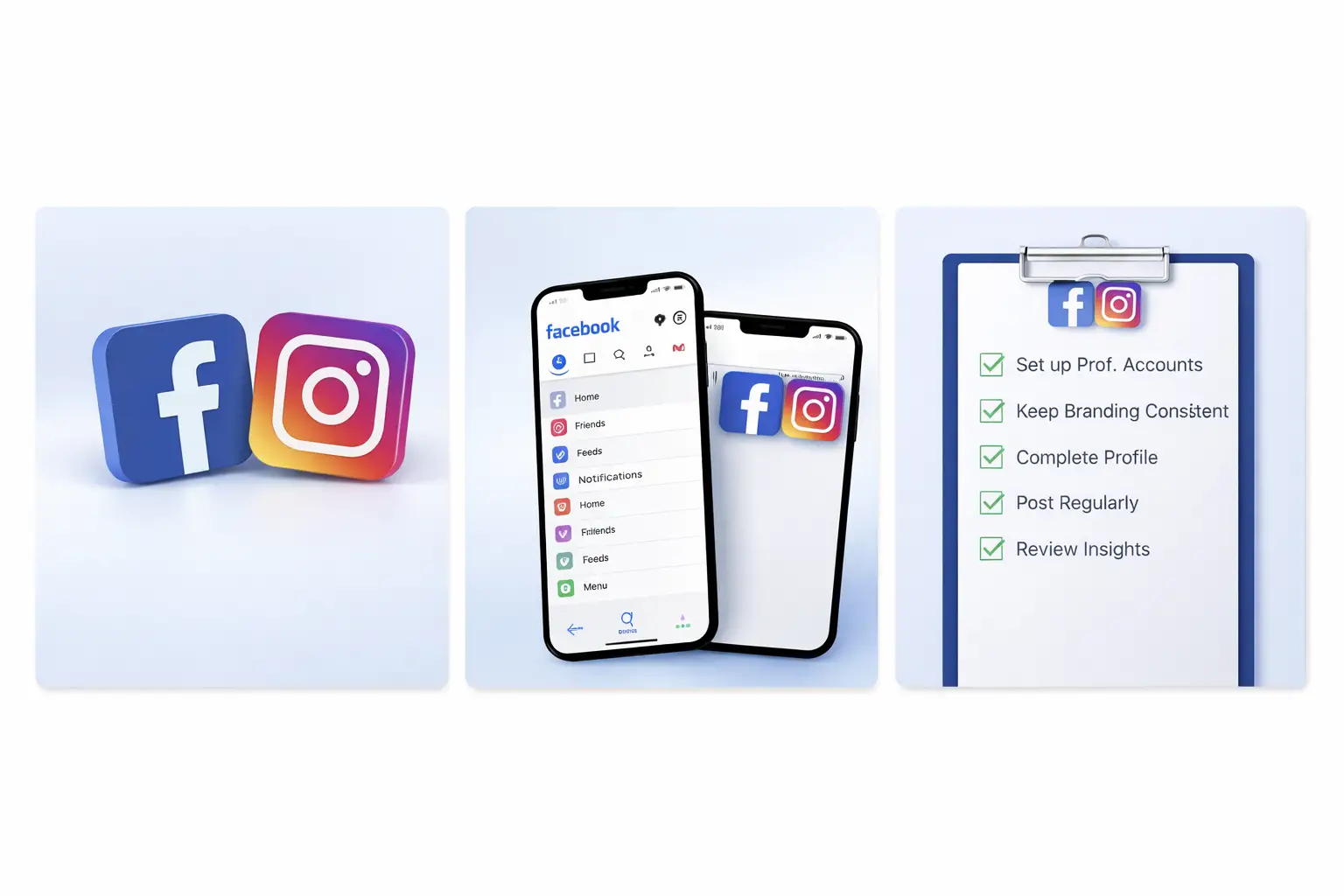
The first few details already shape how the page is understood. A clear profile photo, a readable username, and a short bio or description help people quickly understand who you are and what you offer. On Facebook, that means completing your Page details properly. On Instagram, it helps to switch to a professional account so the page works more clearly as a business presence, not just a content feed.
Keep your branding consistent
If someone finds your business on Facebook, then checks your Instagram right after, the page should still feel familiar. The logo, tone, colors, and overall visual direction do not need to look exactly the same in every post, but they should still feel connected. That consistency helps the brand feel more established and easier to remember.
Make your page easy to trust
People should not have to guess how to reach you or what to do next. Contact details, business hours, location when needed, and action buttons help remove that friction. A stronger page makes the next step obvious, whether that is sending a message, calling, or visiting your website. When those details are missing, even interested people can hesitate.
Post content that answers real questions
A strong page should do more than look presentable. It should help people understand the business. Share content that explains your services, shows your work, answers common questions, or gives useful tips. After a short scroll, people should already have a clearer sense of what you offer, how you work, and what kind of experience they can expect from your brand.
Do not post just to fill space
A page full of posts does not always mean it is doing its job well. What matters more is whether the content feels relevant and purposeful. A few clear and useful posts can do more than many forgettable ones. In most cases, content that helps people understand the business will do more than content posted simply to stay active.
Stay active
You do not need to post every day, but the page should not feel abandoned. People notice when the latest post is outdated or when the page looks neglected. A consistent presence tells people the business is active, current, and paying attention. In many cases, that alone can influence whether someone takes the next step.
Best Practices in Digital Marketing

A lot of businesses are online every day, but that does not always mean the marketing is working.
Some post often, try different tactics, and stay active across platforms, but the results still feel weak or inconsistent. When that happens, the problem is not always effort. Sometimes, it is because the marketing has no clear direction behind it. Doing more does not always fix that. Doing the right things usually matters more.
Start with a clear goal
Before posting content, running ads, or updating your website, ask yourself what the business is actually trying to achieve. Do you want more inquiries? More bookings? More people visiting your site? Better visibility? The answer matters, because different goals need different approaches.
Create content people can actually use
Content should not be there just because it is time to post again. It should help people understand something, answer a question, or make a decision. That could mean explaining your service, showing how your process works, or talking about something your audience is already wondering about.
Keep your message consistent
People rarely check just one platform before they decide. They might see your page on social media, then visit your website after. If the message feels different in each place, the business can start to feel confusing. The more connected your message is, the easier it is for people to understand what you do.
Focus on the customer journey
It also helps when everything connects. A social media post should lead somewhere. A website should make the next step easy. A paid ad should match the page it leads to. When the path feels smooth, people are more likely to stay interested.
Measure what actually matters
Likes and views can be helpful, but they are not everything. What matters more is whether people are taking action. Are they clicking through? Sending inquiries? Booking? Buying? Good digital marketing looks beyond surface numbers and pays attention to what is actually moving the business.
Keep improving
What worked before may not work the same way now. Platforms change, people change, and attention shifts fast. That is why digital marketing needs regular review. Sometimes the problem is not the platform. Sometimes the message just needs to be stronger, clearer, or more relevant.

Build Marketing That Actually Works
In 2026, being online is not the hard part. Showing up in a way people can quickly understand and trust is.
When your page, message, and content feel aligned, the business becomes easier to remember and easier to choose. That is where better marketing starts. Not in doing more, but in showing up better.
If your online presence still feels disconnected, Ensight can help you build marketing that feels clearer, stronger, and easier for people to trust.